
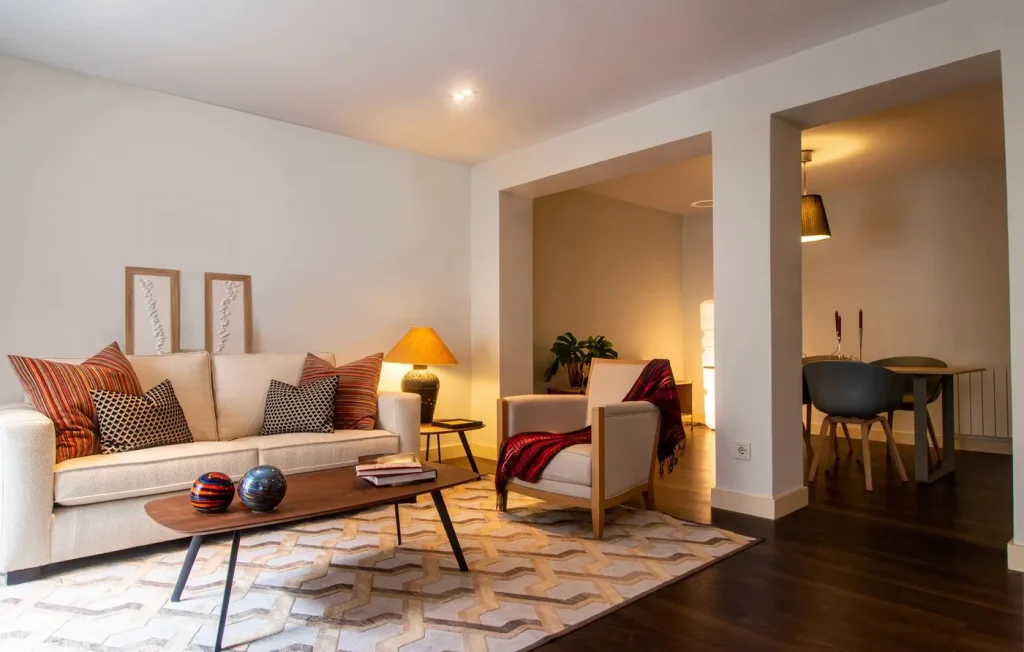
Renovation is the single best time to plan smart lighting, because the wiring, cove details and switch positions are all still open. Get it right now and you get dimmable scenes, hidden cove glow and app or voice control without a single trailing wire later. The smartest approach for a Singapore home is to plan three things before the electrician finishes: where the light comes from (downlights, cove, feature strips), how it is controlled (smart switches vs smart bulbs), and the scenes you actually want (movie, dinner, wind-down). This guide walks through practical smart lighting ideas for HDB flats and condos, and how to wire smart home lighting cleanly during a reno.
Why plan smart lighting during a renovation
Planning smart lighting for home renovation pays off precisely because it is so hard to retrofit well. Smart lighting added after a renovation almost always means compromises — visible LED strips, extra plug-in hubs, or bulbs that lose their settings every time someone flicks the wall switch. Planning smart lighting as part of the reno lets you hide strips in coves and pelmets, put smart switches exactly where you want them, and run everything from one app. The lighting layer becomes part of the home rather than a gadget bolted on afterwards.
The core idea is layers. Every well-lit room mixes three: ambient (general fill), task (kitchen counters, study desk) and accent (cove, feature walls, art). Smart control lets each layer dim independently, which is what turns a flat, bright room into one that shifts from bright and functional to warm and cinematic at a tap.
Idea 1: Cove lighting with dimmable smart strips
Cove lighting — indirect light that bounces off the ceiling for a soft, sourceless glow — is the most requested effect in Singapore reno. It flatters the room, hides the fixture, and looks far more expensive than it costs. Make it smart by using dimmable LED strips on a smart driver or a strip controller, so the whole cove drops to a warm 20% for movie nights and lifts to full for cleaning.
For HDB flats worried about ceiling height, you do not need a full false ceiling — a slim pelmet, a ledge above the TV feature wall, or cabinetry with a small clearance can carry the strip. Warm white around 3000K suits living and bedrooms; a neutral 4000K works better in a study or open kitchen.
Idea 2: Smart downlights with tunable white
Downlights do the heavy lifting in most Singapore homes. Choosing tunable-white smart downlights — ones that shift from warm to cool — means the same ceiling can be crisp and bright for cooking and homework, then warm and low for relaxing. Group them by zone (living, dining, kitchen) during wiring so each area dims on its own rather than all-or-nothing.
Idea 3: Scenes that match how you live
The point of a smart lighting system is not novelty — it is scenes you use daily. A handful worth setting up:
- Movie — cove at 20%, downlights off, TV wall accent low.
- Dinner — warm pendant over the table, everything else dimmed.
- Focus — cool, bright task light at the desk or island.
- Wind-down — low warm light everywhere an hour before bed.
- Away — lights that mimic occupancy while you are out.
Tie these into a home automation hub and they can trigger by time, a single button, or voice — “movie time” sets the whole room in one command.
Idea 4: Smart switches for whole-room control
For most rooms, a smart switch beats swapping every bulb. One smart switch controls the whole light circuit, keeps working as a normal wall switch, and does not lose its brain when someone hits the button — the common frustration with smart bulbs. During a reno you can also choose where switches sit and add scene buttons by the door or bed. The one thing to confirm early is whether your switch boxes have a neutral wire, since some smart switches need it; if not, no-neutral models solve it.
Idea 5: Smart bulbs and strips where colour matters
Smart bulbs still have their place — anywhere you want colour or a specific fitting a switch cannot give you. Colour bulbs in a feature lamp, a child’s room, or festive strips along a balcony add personality that whole-circuit switches cannot. The trick is to use bulbs deliberately for accent and colour, and switches for the main room lighting, rather than filling a whole flat with bulbs that all drop offline if the wall switch is turned off.
Idea 6: Motion, daylight and curtains working together
The best smart lighting barely needs touching. Motion sensors switch on a hallway or bathroom at night at a dim, warm level. Daylight sensors hold a room at a steady brightness as the afternoon fades. And lighting paired with motorised curtains can open the blinds and lift the lights together in the morning. Planned at reno, all of this runs quietly in the background instead of asking for a tap.
Planning smart lighting for an HDB or condo reno
A simple order keeps a reno on track. Decide your scenes first, because they dictate how many zones and switches you need. Mark switch and cove positions on the plan before the electrician starts. Run enough dimmable circuits and leave a tidy spot for the hub and drivers. And get your home WiFi sorted, since even the smartest lights need a solid network behind them. Do these during the reno and the finished home looks clean and behaves effortlessly.
Frequently asked questions
When should I plan smart lighting in a renovation?
As early as possible — before the electrical and ceiling work is finalised. That is when you can position switches, hide cove strips, run dimmable circuits and zone the lighting cleanly, with no visible wires or plug-in add-ons later.
Are smart switches or smart bulbs better for a reno?
Smart switches are better for main room lighting — one switch controls the whole circuit and keeps working as a normal switch. Use smart bulbs for accent and colour where a switch cannot help. Many homes use both.
Can I get cove lighting in an HDB flat?
Yes. You do not need a full false ceiling — a slim pelmet, a ledge above a feature wall, or cabinetry with a small clearance can carry a dimmable LED strip for the same soft, sourceless glow.
What colour temperature is best for smart lighting?
Warm white around 3000K suits living rooms and bedrooms; neutral 4000K works better for kitchens and study areas. Tunable-white fittings let one light do both, shifting from cool and bright to warm and low.
Do smart lights need a hub?
A few WiFi smart lights run without one. A hub becomes worth it once you have many lights, want reliable scenes, or want lighting to work with sensors and curtains — and for automations that keep firing when the internet is down.
Is smart lighting worth it in Singapore?
Yes, especially if planned at reno. Dimmable scenes, cove glow, motion-triggered night lighting and one-tap control add daily comfort for a modest cost, and doing it during the renovation keeps it hidden and wire-free.
Planning a reno? Let’s design your smart lighting first.
Smart lighting is easiest and cheapest to get right while the walls and ceiling are still open. At Roen we plan the layers, scenes, switch positions and cove details around how you live, then wire it into one app with the rest of your home. See what complete smart lighting in Singapore looks like, or talk to us for a quick plan for your flat.
Technical figures (colour temperatures, cove clearances) are general guidance and vary by product and layout. Confirm fittings and wiring with your contractor before installation.