
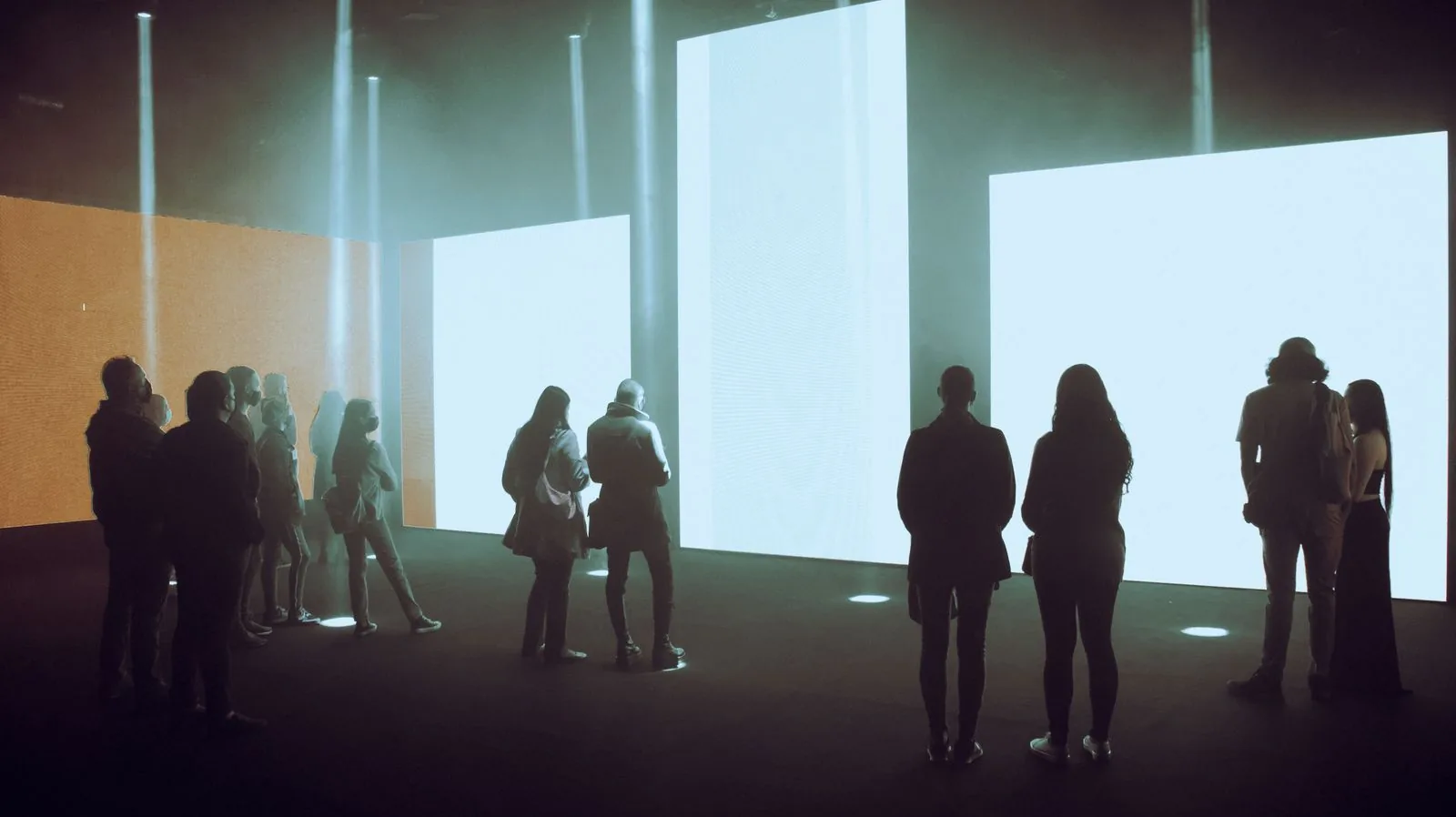
Roen supplies and permanently installs LED video wall systems for offices, lobbies, control rooms and showrooms — from the first site survey to a colour-calibrated handover. One team handles the structure, the power, the cabling and the LED display itself.
“Video wall” covers three quite different products. The right one depends on viewing distance, ambient light, and whether the wall has to run all day, every day. Every video wall Singapore client asks us the same two questions first: how big, and how close. Here is how we decide.
We build walls that run 16–24 hours a day for years — lobbies, boardrooms, control rooms, showrooms and shopfronts. Structure, power, cabling and calibration are designed for that duty cycle.
Our own team handles the frame, the dedicated circuit, the Cat6A signal runs and the LED display itself, with our licensed electrical partners on the power. Nobody else to call, nobody to blame.
Colour and brightness are matched across every module and the seams are aligned tile by tile, so the wall reads as one canvas from day one — and stays that way with scheduled recalibration.
Pick a wall size, set how far people will stand from it, and watch the wall rebuild: the pixel pitch you actually need, how many LED wall panels that takes, the native resolution, and how sharp it looks from where your audience sits. Move the distance slider — the pixels get coarser as you walk closer.
Rule of thumb used here: minimum comfortable viewing distance in metres ≈ pixel pitch in millimetres. Panel price bands are Singapore market ranges (September 2026) for the panels alone — structure, controller, electrical, cabling and calibration typically add 15–30%. The builder is a sizing guide, not a quote: book a site survey and we measure the room, the ambient light and the structure before we price anything.
Six ways to build a wall. We pick by viewing distance, ambient light and duty cycle — not by what has the best margin.
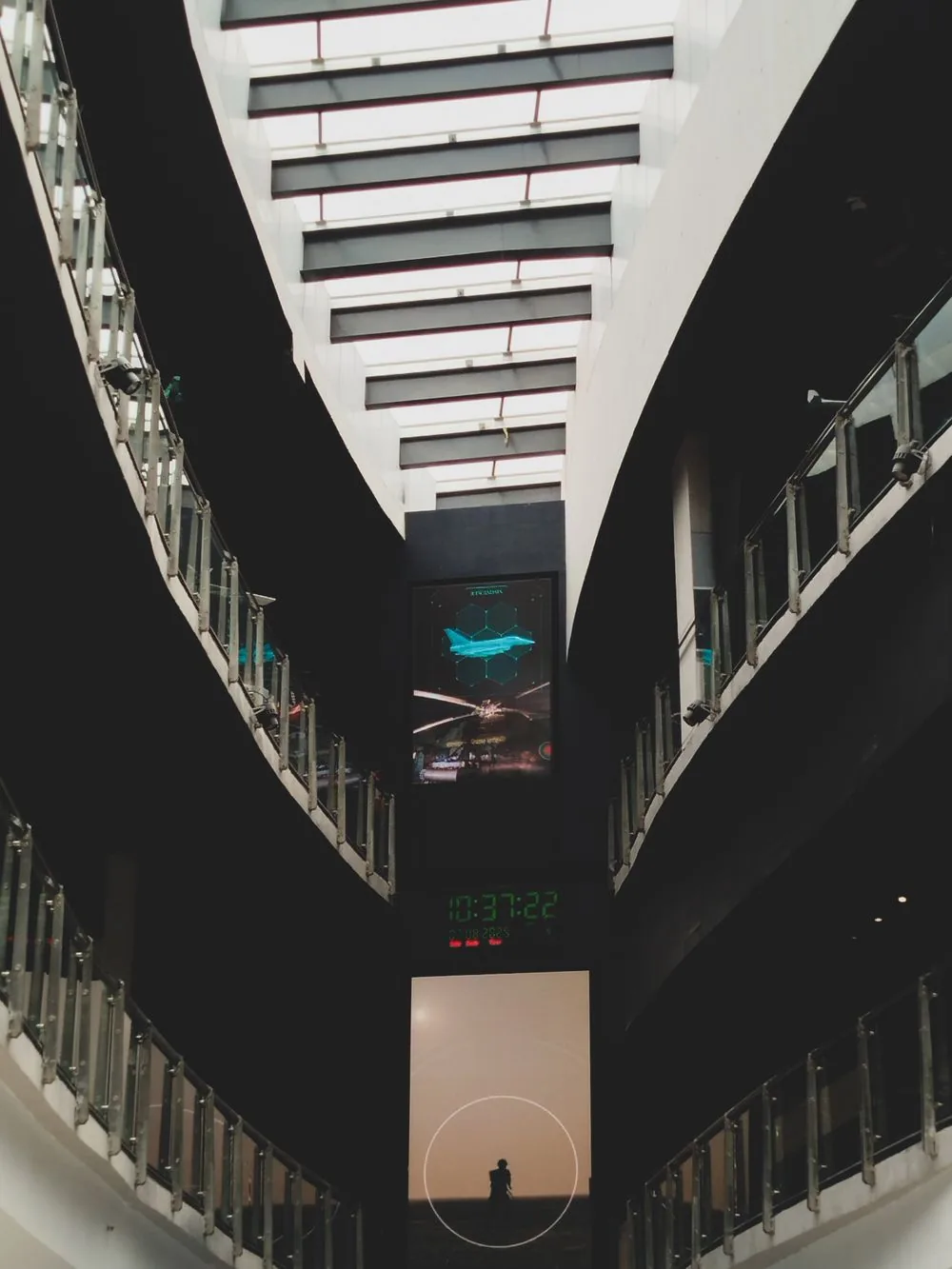
Seamless LED wall panels tiled into one canvas with no visible bezels. Any size, any aspect ratio, bright enough for daylight lobbies — the LED video wall Singapore offices and showrooms specify most. Pitch P1.25 to P4, 600 to 1,200 nits indoor.
Most installs →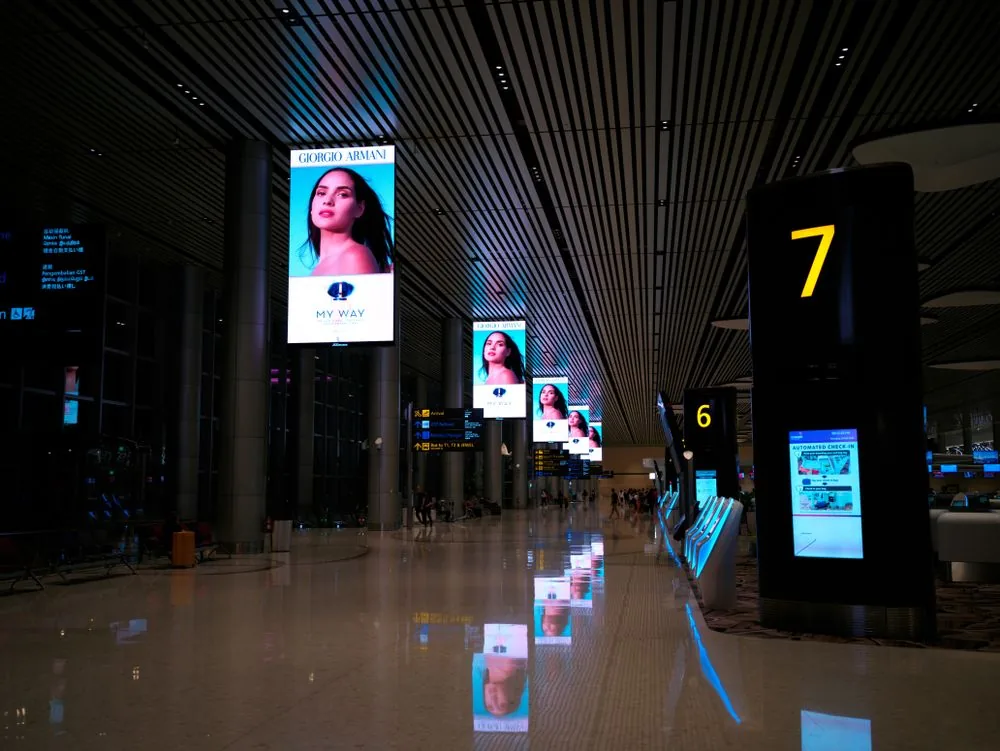
A larger-pitch LED display screen (P2.5–P4) where people watch from five metres or more. Same seamless canvas, lower cost per square metre, runs 16–24 hours a day with no burn-in.
Long viewing distance →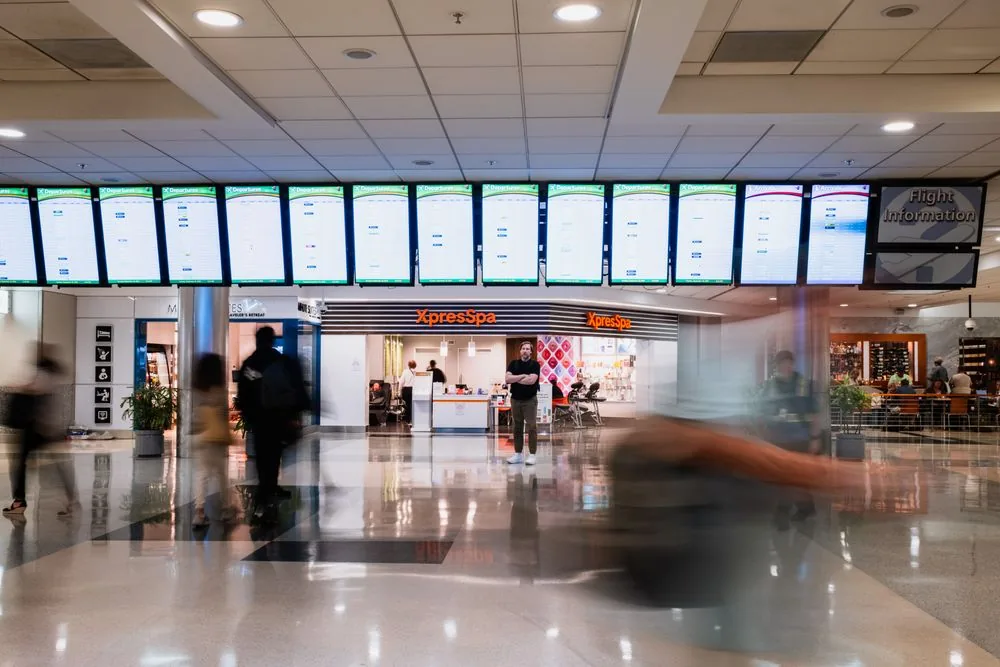
A 2×2 or 3×3 grid of ultra-narrow-bezel commercial LCD panels. Sharp at arm’s length, cheaper than fine-pitch LED, with a thin seam where panels meet. The LCD video wall we recommend under 3 m wide.
Close viewing, tighter budget →
A transparent LED display screen mounts behind glass and keeps the view: content floats on the window, daylight still comes through. Typically 55–75% transparency for showroom windows, atriums and hotel lobbies.
Glass frontage →
Weather-rated cabinets (IP65 front) at 4,000–6,000 nits for direct sun, P3–P6 outdoor pitches, heat and humidity rated for Singapore. We handle the structural, electrical and signage approvals.
Outdoor & facade →
The video wall controller decides what the wall can do: one canvas, split zones, picture-in-picture, live feeds. We spec the processor to the inputs you actually have — laptops, Teams rooms, dashboards, CCTV. HDMI / SDI / NDI, 4K scaling, one-tap presets.
Behind every wall →Every install is a permanent one. These are the rooms a video wall Singapore business commissions most often, and what each one needs from the wall.
 Control room
Multiple live feeds on one canvas, 24/7 duty cycle, fast module swap. Operators sit 2–4 m away, so fine pitch matters here.
 Public & wayfinding
Brand film, visitor welcome, live wayfinding. Viewed from 5 m plus, so a P2.5–P4 LED wall or an LCD tiled wall both work.
 High traffic
Motion content that has to read in daylight and survive a 16-hour day. Window-facing walls need brightness first, pitch second.
 Studio & AV
Company townhalls, livestream backdrops, in-house studios. The wall doubles as a broadcast backdrop, so colour accuracy and refresh rate are specified for camera.
 Boardroom
Teams or Zoom on one half, the dashboard on the other. At 2–3 m a P1.5–P2 LED wall or a 2×2 LCD tiled wall is the honest choice; bigger pitch shows its pixels.
 Showroom
Wrap-around and floor-to-ceiling walls, curved cabinets, content synced across zones. This is where fine-pitch LED and a capable video wall controller matter most.
Most LED display quotes in Singapore list the same six numbers. Only two of them decide whether the wall looks right in your room: pixel pitch and brightness. The rest decide how long it lasts.
Pitch is the distance between LED centres in millimetres. Smaller pitch, sharper image, higher cost. Match it to the closest normal viewing distance, not the furthest: a P2.5 LED wall looks superb from 4 m and pixelated from 1 m.
A boardroom needs 500–800 nits. A daylight lobby needs 1,000–1,200. A wall facing a window or the street needs 1,500 and up. We meter the ambient light on the survey rather than guess.
3,840 Hz refresh keeps the wall camera-safe for livestreams. Die-cast cabinets hold alignment so seams stay invisible. Front-service modules mean a failed tile is swapped from the room, not from behind the wall.
| Spec | What we specify | Why it matters |
|---|---|---|
| Pixel pitch | P1.25 · P1.5 · P1.8 · P2 · P2.5 · P3 · P4 | Sets minimum viewing distance and cost per m² |
| Brightness | 500–1,200 nits indoor; 1,500+ window-facing; 4,000+ outdoor | Readability against ambient light |
| Refresh rate | ≥ 3,840 Hz | No flicker on camera or phone video |
| Cabinet | 500 × 500 mm or 640 × 480 mm die-cast, front-service | Seam alignment; service from the front |
| Ingress rating | IP30 indoor · IP65 outdoor front | Dust, humidity and rain protection |
| Controller | 4K processor, HDMI/SDI/NDI, zone splitting, presets | What the wall can display and how easily |
| Power & data | Dedicated circuit, redundant PSU option, Cat6A signal runs | Uptime; no flicker; clean installation |
An LED wall is a construction job as much as an AV job. This is the sequence, and roughly how long each step takes for a typical 3 × 2 m indoor wall.
We measure the wall, the viewing distances, the ambient light and the structure behind the plaster. Day one, 60–90 minutes.
Pitch, brightness and cabinet layout are fixed. Drawings and an itemised quote for sign-off within the week.
The mounting frame is engineered to the wall type; our licensed electrical partners size and run the dedicated circuit.
Cat6A signal runs go in, then cabinets are hung and aligned tile by tile so the seams disappear. Two to four days on site.
Colour and brightness matched across every module, controller presets built with you, your team trained. Half a day, then live.
Almost nobody publishes numbers for this, so here is how the price actually moves. It is driven by three things: the wall area, the pixel pitch, and what has to be built behind it. These are Singapore market bands for September 2026; the survey turns them into a fixed, itemised quote.
For any video wall Singapore project, halving the pitch roughly doubles the LED cost per square metre. Window-facing brightness adds 15–25%. Outdoor cabinets, curved walls and redundant power each add a step. Structure is the wildcard: a hollow partition wall needs a floor-standing frame; a concrete wall does not. Indicative bands compiled September 2026 from published Singapore LED supplier guides and current commercial-display retail listings (55” video-wall panels S$3,100–5,400 each; a 3 × 2 m P2.6 LED kit listed from about S$19,000; fine-pitch all-in-one LED from about S$5,500/m²). Installation, structure and controller typically add 15–30% to hardware. Every Roen quote itemises modules, controller, structure, electrical, cabling, calibration and warranty separately.
Both are real video walls. One is seamless and bright; the other is cheaper and sharper up close. Neither is “better” — the room decides.
A video wall on its own is a screen. Wired into the rest of the office it becomes the front of the building’s content system. Roen builds both halves — see our digital signage Singapore service for the screens, players and content system that feed the wall, and what runs on the other displays around it.
One content system, one team. The same scheduler runs the lobby wall, meeting-room screens and shopfront displays. “Start townhall” switches the wall to the stage feed, dims the lights and drops the blinds — the smart-office automation we already install. Signal, power and network runs are planned together so nothing is opened twice, and uptime, brightness schedules and module health are visible from one local dashboard.
The cheapest video wall Singapore has to offer becomes the most expensive one the first time a module fails and the spare is on a ship. This is what keeps a Roen wall running.
We recommend and supply a spare-module kit from the same production batch with every wall, so a swap is a same-visit job and the colour matches its neighbours.
LEDs drift. Scheduled recalibration keeps colour and brightness uniform across every cabinet, not just the new ones.
Service contract options spell out response times, what is covered and what is not before you sign — not discovered later.
Structure, electrical, cabling, display and content system are all ours. There is nobody else to call, and nobody to blame.
What clients ask before they commission a video wall in Singapore — price, pitch, LED versus LCD, and who actually does the work.
Ask us anything →Tell us the room and how it will be used. We survey, meter the light, check the structure and come back with an itemised video wall Singapore quote — no obligation.