
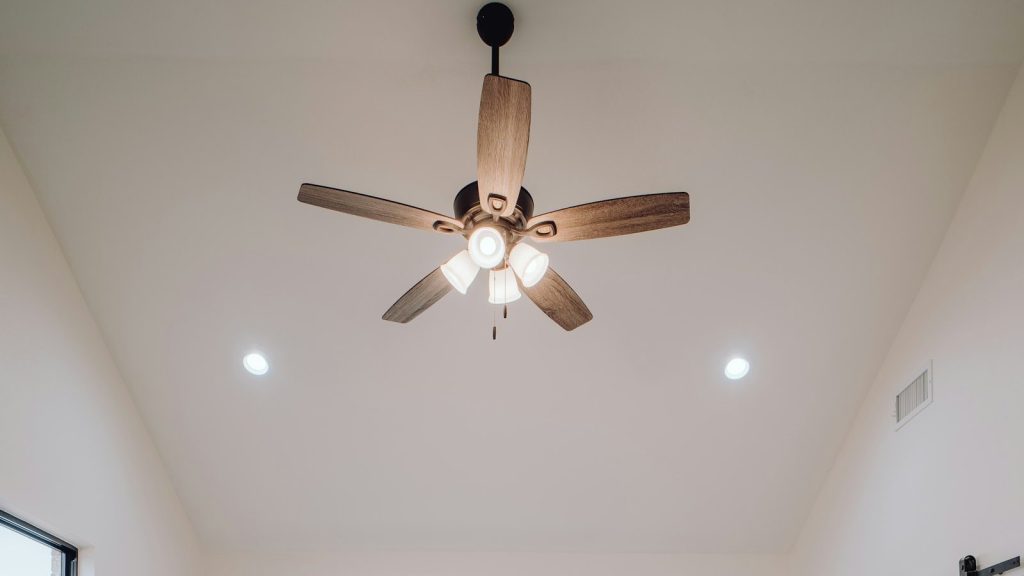
Ceiling fan installation in Singapore is a small job that touches two sets of rules at once: the electrical rules that say who may wire the fan point, and the practical rules of the ceiling itself, concrete or false, that decide whether the fan can hang there safely. This guide walks through both for HDB flats and condos, explains the difference between a straight swap and a new fan point, and sets out what actually moves the price so you can read a quote properly. It is written from the installer’s side of the ladder, which is where most of the surprises live.
Who is allowed to do ceiling fan installation in Singapore
Hanging the fan body is not the regulated part. Connecting it to the mains is. In Singapore, electrical installation work in a home, which includes a new fan point, a new switch or any change to the wiring behind one, is work for a licensed electrical worker (LEW), and HDB’s renovation guidelines expect electrical works in a flat to be carried out that way. A handyman can mount a bracket; the wiring that feeds it needs someone licensed to do it and to take responsibility for it. If a quote is unusually cheap, this is usually the corner being cut, and it is the one that matters if the fan ever trips the circuit or a buyer’s inspector asks who did the work.
For a simple like-for-like swap on an existing, working fan point, the electrical part is small, but it is still the same rule: the person connecting the live, neutral and earth is doing electrical work. Our electrician Singapore team does the full job, mounting and wiring, so there is one person accountable for the whole thing.
Concrete ceiling or false ceiling: the question that decides everything
Every ceiling fan installation starts by finding out what is above the plasterboard. There are three common situations in a Singapore home:
- Bare concrete ceiling with an existing fan hook or point. The easiest case. The hook or box is already anchored into the slab; the installer checks it is sound, mounts the new fan’s bracket and connects the wiring.
- Bare concrete, no fan point. A new anchor is drilled into the slab and a new cable run from the nearest switch or junction, either in surface trunking or, during a renovation, concealed. This is the “new fan point” case and it is what most of the cost in a quote is paying for.
- False ceiling. A plasterboard ceiling cannot carry a fan on its own. The fan needs a support that reaches through to the concrete slab above: a downrod extension and a bracket fixed to the slab, or a purpose-built frame set into the false ceiling at renovation time. If a fan was fitted to the plasterboard alone, it wobbles, then it cracks the board, then it comes down. We check this before quoting, every time.
The honest advice for anyone renovating: decide where the fans go before the false ceiling closes. A support frame costs little to add at that stage and a lot to add afterwards.
Ceiling fan installation in an HDB flat: what is different
HDB flats add a few practical points on top of the electrical rule above:
- Ceiling height. Many HDB rooms sit around the height where a standard downrod puts the blades uncomfortably low. Short-downrod and hugger-style fans exist for exactly this, and the choice is made at the site check, not from a catalogue photo.
- The switch box may have no neutral. Older flats often wire the switch with live and load only. That does not stop a fan being installed, but it matters if you want a smart wall control later. Our guide to smart switches and HDB no-neutral wiring explains the options.
- Loading. A fan draws little, so it rarely tips a flat over its electrical loading on its own. If the fan is one of several new appliances in a renovation, read how to upgrade HDB electrical loading first.
- Permits. The fan itself does not need a permit, but if the installation is part of wider works, such as new concealed wiring or a false ceiling, those works fall under HDB’s renovation rules. Confirm the current guidelines with HDB or your Town Council before the work starts, because they are updated from time to time.
Straight swap or new fan point: the two jobs people confuse
| Straight swap | New fan point | |
|---|---|---|
| Starting point | A working fan or fan point already there | No point; cable has to be run |
| Electrical work | Disconnect old, connect new | New cable from switch or circuit, new switch if needed |
| Ceiling work | Check the existing anchor | Drill a new anchor into concrete, or add a frame to a false ceiling |
| Time on site | Usually under an hour per fan | Longer; depends on the cable route and ceiling |
| Who | Licensed electrical worker | Licensed electrical worker, plus ceiling work |
When you ask for a quote, say which of the two you are asking for. Most price confusion online comes from comparing a swap price with a new-point price.
DC or AC fan, and does it change the installation?
Not the mounting, but a little of the wiring. An AC fan is the traditional kind, usually controlled by a wall regulator. A DC fan has its own driver and remote, draws less power at the same airflow and is quieter at low speed, which is why most new fans sold here are DC. Installation-wise, a DC fan is normally wired to a plain on-off switch rather than a regulator, so if you are replacing an AC fan with a DC one, the old wall regulator comes out. If you want the fan on an app or voice assistant, that decision is also better made now, because some controls go inside the fan canopy at installation time; see our smart ceiling fan Singapore page for what can and cannot be retrofitted.
What changes the price of ceiling fan installation in Singapore
We do not publish a price list, because the same fan can be a short job in one flat and a half-day in the next. These are the things that move the number, roughly in order:
- Swap or new point. The biggest factor by far.
- Ceiling type. Concrete with an anchor is quickest; a false ceiling that needs a support through to the slab is the most work.
- Cable route. Surface trunking is faster than concealed wiring, which belongs in a renovation.
- Fan size and weight. A large fan on a long downrod needs a sturdier anchor and two people.
- Number of fans. Several fans in one visit cost less each than one fan on three separate days.
- Extras. A new switch, a dimmer or regulator, a light kit, or smart control.
Indicative third-party labour rates for Singapore, read from installers’ published rate cards, are collected in the FAQ on our smart ceiling fan page. Treat them as a sanity check for quotes, not as our price; we quote after a site check.
A sensible order of work
- Photograph the ceiling and the switch. One photo of the ceiling where the fan will go, one of the inside of the switch box if you can safely open the cover, or just the faceplate if not.
- Measure the room and the ceiling height. That decides the fan size and whether a short downrod or hugger fan is needed.
- Choose the fan after step 2, not before. The most common mistake is buying the fan first.
- Site check and quote. Concrete or false ceiling, swap or new point, cable route, switch type.
- Installation. Power off at the breaker, anchor checked or installed, fan mounted and balanced, wiring connected and tested, switch or remote paired.
- Test under load. All speeds, any light kit, and the wobble check at full speed.
Frequently asked questions
Can I install a ceiling fan myself in Singapore?
You can hang the bracket and body, but connecting it to the mains is electrical work for a licensed electrical worker. In practice the two steps happen together, so most people have the whole job done by the electrician.
Can a ceiling fan go on a false ceiling?
Only with a support that reaches the concrete slab above, either a downrod and bracket fixed to the slab or a frame built into the false ceiling. Plasterboard alone will not hold a fan safely.
Do I need HDB permission to install a ceiling fan?
The fan itself does not need a permit. If the job is part of wider renovation works such as new concealed wiring or a false ceiling, those works fall under HDB’s renovation guidelines, so confirm the current rules with HDB or your Town Council before starting.
How long does ceiling fan installation take?
A straight swap on an existing point is usually under an hour per fan. A new fan point takes longer and depends on the cable route and the ceiling; we give a time estimate with the quote.
Can the fan be controlled from my phone?
Yes, with a smart wall switch or a module inside the canopy, depending on the fan. Decide before installation, because some options are easier to fit while the canopy is open.
Fan point, wiring and the fan itself, by one licensed team
Send a photo of your ceiling and switch and we will tell you whether it is a swap or a new point, what the ceiling needs, and what it will cost, before anyone climbs a ladder. The same team wires your HDB electrician jobs and puts the fan on your smart home app if you want it there.
Electrical work in Singapore homes is regulated by the Energy Market Authority’s licensed electrical worker scheme; HDB renovation guidelines are updated from time to time and should be checked for the current position. This article describes general practice and is not a price list.