
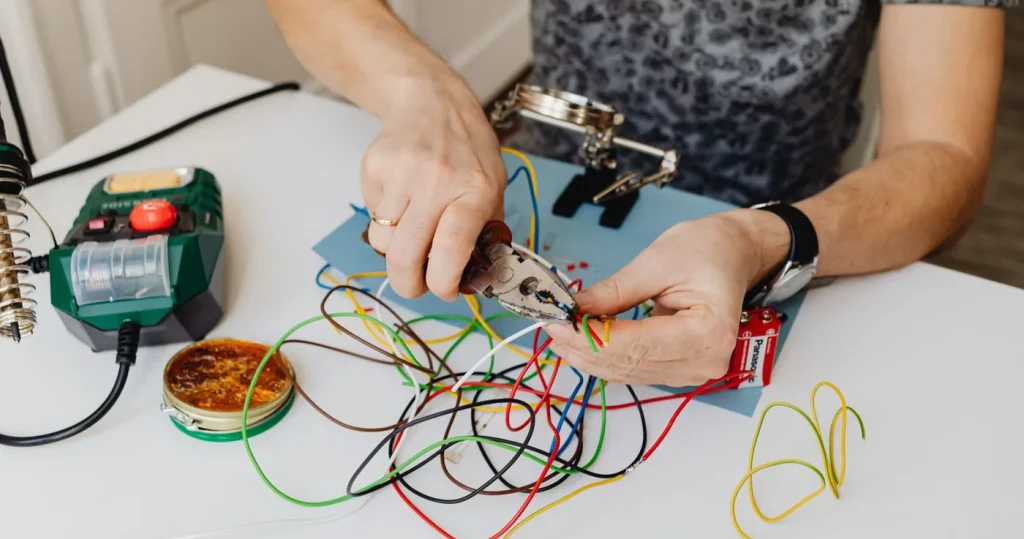
In Singapore, the answer is almost always yes — nearly all electrical work beyond plugging in an appliance must be done by a Licensed Electrical Worker (LEW). Unlike some countries that allow limited DIY home wiring, Singapore does not: the Energy Market Authority (EMA) requires electrical installation work at your premises to be carried out by, or under the direct supervision of, a licensed electrician. This guide explains, in plain terms, which jobs legally need an LEW, what you can do yourself, and the real risks of getting it wrong — so you know when to call a professional.
What a Licensed Electrical Worker (LEW) is
A Licensed Electrical Worker is an electrician licensed by the EMA to carry out electrical installation work in Singapore. The role is more than doing the wiring: an LEW also inspects and certifies that the installation is safe before the electricity supply is turned on. That certification is the point — it is a legal sign-off that the work meets Singapore’s electrical standards, which is exactly why the law reserves this work for licensed professionals rather than DIY.
Do you need a licensed electrician? When it’s required
The rule is broad. Under Singapore’s Electricity Act, electrical installation work — any rewiring, alteration, modification, repair or replacement to your electrical installation — must be done by or under the supervision of an LEW. In practice, that covers almost everything with wiring behind it:
- Adding, moving or replacing power points, light points or switches.
- Rewiring, or running new circuits and cabling.
- Installing or replacing a distribution board (DB) or circuit breakers.
- Upgrading your HDB electrical loading (single- to three-phase).
- Hardwiring appliances, ceiling fans, water heaters, cooker hoods and the like.
- Fitting hardwired smart switches that replace the wall switch.
If a job involves opening up wiring or connecting to your fixed installation, assume it needs a licensed electrician — and for HDB flats, an HDB licensed electrician familiar with flat wiring and loading.
What you can do yourself
The DIY line in Singapore is narrow, and it is about plug-in, not wiring:
- Plugging appliances into existing sockets.
- Screwing in a light bulb, or swapping a plug-in smart bulb or smart plug.
- Resetting a tripped circuit breaker.
- Replacing a remote or batteries in a device.
Anything that touches the fixed wiring — even “just” changing a wall switch or adding a socket — crosses into licensed-work territory. When in doubt, treat it as work for a licensed electrician.
Why it is not worth doing yourself
Beyond the legal requirement, unlicensed electrical work carries real risk. Faulty wiring is a leading cause of electrical fires and shocks, and DIY work has no independent safety certification behind it. There are legal consequences too: carrying out electrical installation work without a licence — or without LEW supervision — can lead to significant penalties under the Electricity Act, including heavy fines and, in serious cases, imprisonment. Unauthorised work can also void insurance and, in an HDB flat, breach the rules around your installation. The cost of an electrician in Singapore is small against those risks.
Certified vs licensed: know the difference
You will see “certified”, “competent” and “licensed” used loosely. The one that matters legally is licensed — an EMA Licensed Electrical Worker is the only category permitted to carry out and certify electrical installation work. A handyman who is skilled but not an LEW cannot legally do or sign off your wiring. When you hire, ask specifically for a licensed electrician, and for HDB work, one experienced with HDB installations and loading.
How this fits a home upgrade or smart home
Most home upgrades quietly involve licensed work. Running network points during a renovation, adding sockets for new appliances, moving light points, or hardwiring smart switches and devices all need an LEW. The tidy way to handle it is to plan the electrical work as part of the project and have a licensed electrician do it in one go — safe, certified, and done right the first time, rather than piecemeal fixes later.
Frequently asked questions
Do you legally need a licensed electrician in Singapore?
Yes, for nearly all electrical work. The EMA requires electrical installation work — rewiring, alterations, repairs or replacements to your installation — to be done by or under the supervision of a Licensed Electrical Worker. Only plug-in tasks are DIY.
Can I change a light switch or socket myself in Singapore?
No. Replacing or adding a wall switch or socket touches the fixed wiring, which is licensed work. Only plug-in actions — bulbs, plugs, resetting a breaker — are safe to do yourself. Everything with wiring behind it needs a licensed electrician.
What happens if I do electrical work without a licence?
It is illegal and risky. Unlicensed electrical installation work can lead to significant penalties under the Electricity Act, including heavy fines and possible imprisonment, and it carries fire and shock risks with no safety certification — and may void insurance.
What is the difference between a certified and licensed electrician?
“Licensed” is the one that counts legally — an EMA Licensed Electrical Worker is the only category allowed to carry out and certify electrical installation work. “Certified” or “competent” alone does not permit doing or signing off your wiring.
Do I need a licensed electrician for HDB electrical work?
Yes — and ideally one experienced with HDB installations. Work like adding points, rewiring, or upgrading HDB electrical loading must be done by a licensed electrician Singapore recognises as an EMA LEW, who can certify it safe.
Does installing smart switches need a licensed electrician?
Hardwired smart switches replace the wall switch and connect to the fixed wiring, so yes — that is licensed work. Plug-in smart plugs and screw-in smart bulbs, by contrast, need no electrician.
Need electrical work done safely and to code?
If a job touches your wiring — new points, rewiring, loading upgrades or hardwired smart devices — it needs a licensed electrician who can do it and certify it safe. At Roen we handle home electrical work as part of your upgrade, done properly the first time. See our electrical services in Singapore, or talk to us about your project.
This is general guidance as of July 2026, not legal advice. Electrical licensing rules are set by the Energy Market Authority (EMA) under the Electricity Act and can change — confirm current requirements with the EMA or a Licensed Electrical Worker before any work.