
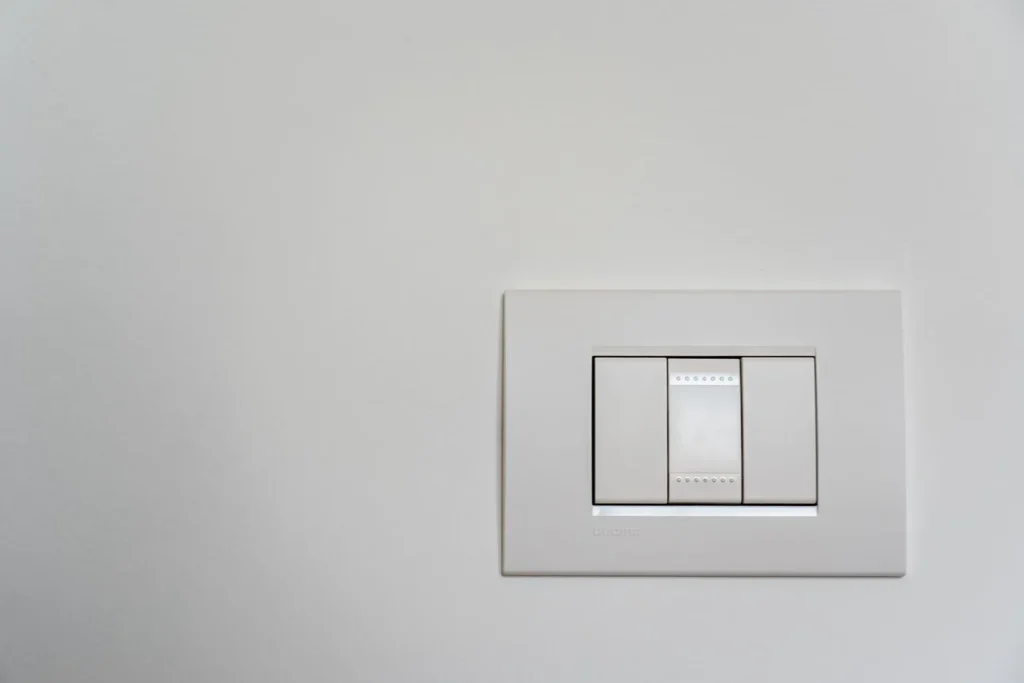
For most rooms in a Singapore home, a smart switch is the better choice than a smart bulb — it controls the whole light circuit, still works as a normal wall switch, and does not go dumb when someone flicks it off. A smart bulb wins only where you want colour or a specific fitting a switch cannot give you. The honest answer to smart switch vs smart bulb is that they solve different jobs: switches for reliable whole-room control, bulbs for accent and colour. This guide explains the trade-offs for HDB flats and condos — wiring, reliability, cost and features — so you buy the right one the first time.
The core difference
A smart switch replaces the wall switch and makes the whole circuit smart — every bulb on that switch becomes controllable, whatever bulbs they are. A smart bulb (or smart light switch alternative) puts the intelligence in the bulb itself, so you control each bulb individually through its app while the wall switch stays ordinary. That single distinction — smart at the wall versus smart in the bulb — drives every other trade-off below.
Installation: bulbs are easier, switches are cleaner
Smart bulbs are the easy starting point: screw or plug one in, open the app, done. No wiring, no risk, perfect for renters. Smart switches take more effort because they replace the wall switch and usually need a live and neutral wire, which is electrical work best left to a professional. The pay-off is a cleaner result — nothing to see, normal-looking switches, and every existing bulb made smart at once.
In Singapore the wiring catch is the neutral wire. Many older HDB switch boxes have no neutral, which some WiFi smart switches need. It is entirely solvable with a no-neutral switch or a relay module, but it is worth checking before you buy a boxful.
Reliability: the deciding factor
This is where smart switches pull ahead, and it is the point most people only learn after living with smart bulbs. A smart bulb needs constant power to stay smart — if anyone turns the wall switch off, the bulb loses power, drops off the network, and no longer responds to the app or voice until the switch is back on. In a household where family or guests instinctively flick switches, that is a daily annoyance.
A smart switch never has that problem. It stays connected whether you use the app, voice, or the physical button, so control is consistent for everyone in the home. For main room lighting that has to just work, a switch is the more reliable choice.
Cost: switches scale better
Upfront, a single smart bulb looks cheaper than a smart switch. But the maths flips as soon as a room has more than one or two bulbs. A living room with six downlights needs six smart bulbs — or one smart switch. For any multi-bulb room, a switch is the more cost-effective way to make the whole circuit smart, and it keeps working with cheap ordinary bulbs you can replace for a few dollars.
| Smart switch | Smart bulb | |
|---|---|---|
| Controls | Whole circuit / room | One bulb each |
| Install | Wiring (pro) | Screw in, done |
| Works after wall switch off | Yes | No — goes offline |
| Colour / effects | No | Yes (RGB, tunable) |
| Cost for a 6-bulb room | One switch | Six bulbs |
| Best for | Main room lighting | Accent & colour |
Features: bulbs win on colour
The one clear advantage of smart bulbs is colour and effects. Full-RGB and tunable-white bulbs let you set any shade, build colourful scenes, and shift a room from cool daylight to warm evening. A smart switch cannot do that — it dims and controls whatever bulbs are on the circuit, but it cannot change their colour. So if a room is about mood and colour — a feature lamp, a child’s room, a display shelf — bulbs are the right tool.
Compatibility: check your fittings and dimmers
Two Singapore-specific gotchas. First, smart bulbs only exist for common fittings — if your fixture uses an unusual bulb shape, a smart switch that works with any bulb is the safer bet. Second, if you already have a dimmer, adding smart bulbs on top often causes flicker or poor range; a smart switch (or a proper smart dimmer) avoids that clash. When in doubt, make the circuit smart at the switch and keep ordinary bulbs.
So which should you choose?
- Main lighting in living, bedrooms, kitchen: smart switch — reliable, whole-room, cost-effective.
- Accent, colour, mood, feature lamps: smart bulb.
- Renting, cannot change wiring: smart bulbs (or plug-in smart plugs for lamps).
- Best of both: switches for the ceilings, a few colour bulbs where they add character.
Most well-designed Singapore homes end up with mostly smart switches and a handful of smart bulbs — switches doing the reliable everyday work, bulbs adding colour where it counts. Tie either into a smart home hub and you get scenes, voice and automations across the whole lighting layer.
Frequently asked questions
Is a smart switch or smart bulb better?
For main room lighting a smart switch is better — it controls the whole circuit, stays reliable when the wall switch is used, and costs less per room. Smart bulbs are better only for colour and accent lighting. Many homes use both.
Why do smart bulbs stop working?
A smart bulb needs constant power. If someone turns the wall switch off, the bulb loses power and drops off the network until the switch is back on. A smart switch avoids this because it stays connected regardless of how it is used.
Do smart switches work in HDB flats?
Yes, though many older HDB switch boxes lack a neutral wire that some WiFi smart switches need. No-neutral switches or a relay module solve it — it is worth checking your wiring before buying.
Can I use smart switches and smart bulbs together?
Yes, but not usually on the same light. Use smart switches for main circuits and smart bulbs on separate accent fittings. Putting smart bulbs on a smart-switched circuit can cut their power and knock them offline.
Are smart switches cheaper than smart bulbs?
For any room with more than one or two bulbs, yes. One smart switch controls the whole circuit, while smart bulbs cost per bulb. Switches also let you keep inexpensive ordinary bulbs.
Do I need an electrician to install a smart switch?
For most homes, yes — smart switches replace the wall switch and involve live wiring, which is best done by a professional. Smart bulbs, by contrast, need no wiring and can be installed by anyone.
Not sure which lights to make smart?
Switches, bulbs, or both — the right mix depends on your rooms, wiring and how your household uses light. At Roen we plan it around you, handle the wiring cleanly, and tie everything into one app with scenes and voice. See what complete smart switches in Singapore look like, or talk to us for a quick plan for your flat.
Guidance here is general and varies by home wiring, fittings and product. Confirm neutral-wire availability and dimmer compatibility with a licensed electrician before installation.